Buy pierreblommaert.be ?
We are moving the project
pierreblommaert.be .
Are you interested in purchasing the domain
pierreblommaert.be ?
domain@kv-gmbh.de · 0541-91531010
Buy pierreblommaert.be ?
What are the differences between covalent bonds, metallic bonds, and ionic bonds?
Covalent bonds are formed when two atoms share electrons, resulting in a strong bond between the atoms. Metallic bonds occur between metal atoms, where the electrons are delocalized and free to move throughout the structure, creating a strong bond. Ionic bonds are formed between a metal and a nonmetal, where one atom transfers electrons to the other, resulting in the formation of positively and negatively charged ions that are attracted to each other. Overall, covalent bonds involve electron sharing, metallic bonds involve electron delocalization, and ionic bonds involve electron transfer. **
Do CO bonds form with other CO bonds?
No, CO bonds do not typically form with other CO bonds. Carbon monoxide (CO) is a stable molecule with a triple bond between the carbon and oxygen atoms. This triple bond is strong and does not readily form additional bonds with other CO molecules. Instead, CO molecules tend to interact with other types of molecules through various types of chemical reactions. **

Similar search terms for Bonds
Top-Angebote
Products related to Bonds:
-
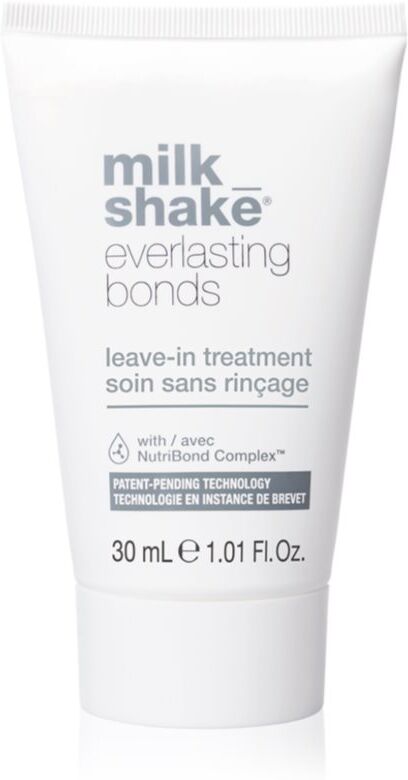
milk_shake® Everlasting Bonds Leave-in Treatment soin fortifiant sans rinçage pour cheveux 30 mlmilk_shake® Everlasting Bonds Leave-in Treatment, 30 ml, Après-shampooings sans rinçage mixte, Le soin sans rinçage milk_shake® Everlasting Bonds Leave-in Treatment procure aux cheveux une dose instantanée d’hydratation et de nutrition intenses. Ce soin leur donne tout ce dont ils ont besoin juste après le lavage, sans avoir à passer plus de temps que nécessaire dans la salle de bains. Il contribue à lisser les cheveux, à leur redonner leur brillance naturelle et à restaurer leur structure. Il favorise également leur régénération et facilite le démêlage. Tout cela facilement, rapidement et sans rinçage. Il suffit de l’appliquer, de frotter ou éventuellement de les peigner pour que les cheveux retrouvent toute leur beauté et leur éclat. Essayez ce soin sans rinçage, un moyen simple et rapide de régénérer vos cheveux, et découvrez tous ses autres bienfaits. Le produit : lisse et agit contre les frisottis apporte l’hydratation nécessaire répare les dégradations mécaniques et chimiques protège les cheveux pour qu’ils ne s’abîment pas empêche les cheveux de se casser améliore la structure des cheveux Composition du produit : acide hyaluronique : fixe une grande quantité d’eau et hydrate intensément zinc : contribue à lutter contre les pellicules, améliore l’état global du cuir chevelu, le rééquilibre, l’apaise, régule la production de sébum, nettoie les follicules obstrués, les libère et favorise ainsi la croissance de cheveux sains protéines : nourrissent les cheveux, les revitalisent, les renforcent, augmentent leur résistance face à la casse et aux fourches, les lissent, aident à réparer les cuticules abîmées, ce qui contribue à les rendre plus doux et plus brillants sans sulfates sans silicones Mode d’emploi : Pulvérisez sur les cheveux humides ou secs et ne rincez pas.13,40 €*Shipping: 3,45 €Secure redirect to the provider
-
Collier-Laisse Elegant Taboom 1mFaites glisser doucement la chaîne du Collier-Laisse Elegant Taboom 1m entre vos doigts. Sensuel, non ? Ce bijou d’obéissance signé Taboom allie charme et contrôle. Il attire le regard, puis retient l’attention, tout simplement.Élégance et maîtrise 💫Le collier en simili mesure 3 cm de largeur et34,99 €*Shipping: 0,00 €Secure redirect to the provider
-
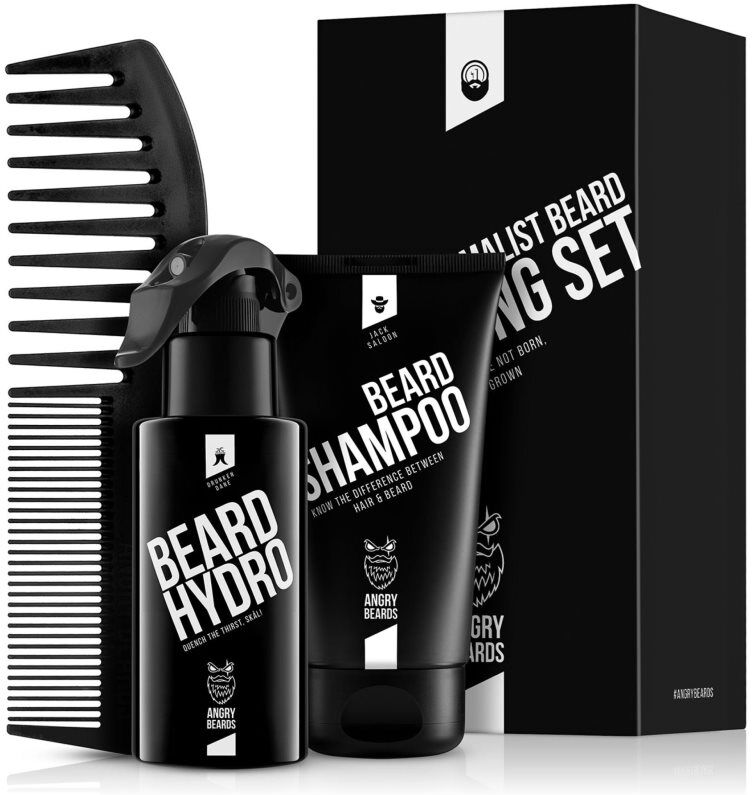
Angry Beards Minimalist Grooming Set ensemble barbeAngry Beards Minimalist Grooming Set, 1 pcs, Kits barbe Qui dit occasions spéciales, dit cadeaux spéciaux, que ce soit pour se faire plaisir ou pour gâter ceux que l’on aime. Le coffret cadeau Angry Beards Minimalist Grooming Set contient un assortiment de parfums et de produits de beauté soigneusement sélectionnés et choisis avec amour. Que vous les découvriez tous en même temps ou que vous preniez le temps de les ouvrir, ces produits (vous) plairont à coup sûr. L'ensemble contient: Angry Beards Beard Hydro lotion tonique barbe 100 ml Angry Beards Jack Saloon Beard Shampoo shampoing pour barbe pour homme 150 ml Angry Beards peigne à barbe 1 pcs Le produit : possibilité de créer une routine quotidienne27,45 €*Shipping: 3,45 €Secure redirect to the provider


-
Why are intermolecular bonds weaker than electron pair bonds?
Intermolecular bonds are weaker than electron pair bonds because they involve interactions between molecules rather than within a single molecule. In intermolecular bonds, the attractive forces between molecules are generally weaker than the covalent bonds that hold atoms together within a molecule. Additionally, intermolecular bonds are typically temporary and can be easily broken, whereas electron pair bonds are strong and stable. Overall, the weaker nature of intermolecular bonds allows molecules to move and interact with each other more freely. **
-
Why are intermolecular bonds generally weaker than covalent bonds?
Intermolecular bonds are generally weaker than covalent bonds because they involve interactions between molecules rather than within a single molecule. Covalent bonds involve the sharing of electrons between atoms, creating strong bonds within a molecule. In contrast, intermolecular bonds, such as hydrogen bonds or van der Waals forces, are weaker because they are based on temporary interactions between molecules, which can be easily broken. Additionally, intermolecular bonds are influenced by factors such as distance and orientation, further contributing to their weaker nature compared to covalent bonds. **
-
Why are intermolecular bonds typically weaker than covalent bonds?
Intermolecular bonds are typically weaker than covalent bonds because they involve interactions between molecules rather than within a single molecule. In intermolecular bonds, the attractive forces between molecules, such as van der Waals forces or hydrogen bonding, are weaker than the strong sharing of electrons in covalent bonds. Additionally, intermolecular bonds are more easily broken or disrupted by changes in temperature or pressure, leading to lower bond energies compared to covalent bonds. **
-
Why are intermolecular bonds generally weaker than electron pair bonds?
Intermolecular bonds are generally weaker than electron pair bonds because they involve interactions between molecules, which are larger and less localized than the interactions between atoms in a covalent bond. In intermolecular bonds, the attractive forces are typically weaker due to the larger distance between molecules and the lack of direct sharing of electrons. In contrast, electron pair bonds involve the sharing of electrons between atoms, leading to stronger and more localized bonding interactions. **


Why are polar bonds lower in energy than nonpolar bonds?
Polar bonds are lower in energy than nonpolar bonds because they involve the unequal sharing of electrons between two atoms with different electronegativities. This unequal sharing creates a dipole moment, which results in an attractive force between the partially positive and partially negative ends of the molecule. This electrostatic attraction lowers the overall energy of the molecule compared to nonpolar bonds, where electrons are shared equally. As a result, polar bonds are typically stronger and more stable than nonpolar bonds. **
Why are intermolecular bonds typically weaker than electron pair bonds?
Intermolecular bonds are typically weaker than electron pair bonds because they involve interactions between molecules rather than within a single molecule. In intermolecular bonds, the attractive forces between molecules are generally weaker than the covalent bonds that hold atoms together within a molecule. Additionally, intermolecular bonds are usually based on weaker forces such as van der Waals forces, hydrogen bonding, or dipole-dipole interactions, which are not as strong as the sharing or transfer of electrons in covalent or ionic bonds. **
Top-Angebote
Products related to Bonds:
-
milk_shake® Everlasting Bonds Shampoo shampoing rénovateur pour cheveux abîmés 50 mlmilk_shake® Everlasting Bonds Shampoo, 50 ml, Shampoings pour femme, Pour garder des cheveux en bonne santé, brillants et pleins de vitalité, il est important d’en prendre correctement soin. Et cela commence par un lavage régulier. Le shampoing milk_shake® Everlasting Bonds Shampoo aide à éliminer efficacement toutes les impuretés des cheveux et du cuir chevelu, telles que la saleté, l’excès de sébum et les résidus de produits coiffants et des autres soins cosmétiques. Il vous procure également une sensation de propreté et de fraîcheur, prépare parfaitement les cheveux et le cuir chevelu à l’application des autres soins et renforce les effets des substances actives qu’ils contiennent. Le produit : lave les cheveux et nettoie le cuir chevelu régénère et nourrit les cheveux hydrate intensément renforce la fibre capillaire limite la casse de cheveux Composition du produit : acide hyaluronique : fixe une grande quantité d’eau et hydrate intensément zinc : contribue à lutter contre les pellicules, améliore l’état global du cuir chevelu, le rééquilibre, l’apaise, régule la production de sébum, nettoie les follicules obstrués, les libère et favorise ainsi la croissance de cheveux sains protéines : nourrissent les cheveux, les revitalisent, les renforcent, augmentent leur résistance face à la casse et aux fourches, les lissent, aident à réparer les cuticules abîmées, ce qui contribue à les rendre plus doux et plus brillants Mode d’emploi : Appliquez une quantité raisonnable de shampoing sur les cheveux mouillés. Faites mousser et rincez abondamment.12,40 €*Shipping: 3,45 €Secure redirect to the provider
-
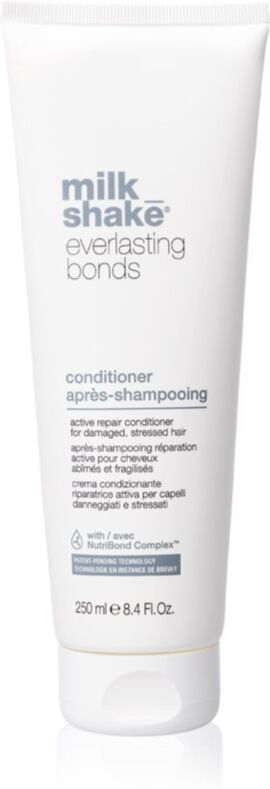
milk_shake® Everlasting Bonds Conditioner après-shampoing rénovateur pour cheveux abîmés 250 mlmilk_shake® Everlasting Bonds Conditioner, 250 ml, Après-shampooings cheveux pour femme, Le shampoing a pour effet d’ouvrir la cuticule, c’est-à-dire la couche externe des cheveux. Une fois lavés, ils ont donc besoin d’un soin qui referme cette cuticule. C’est précisément le rôle de l’après-shampoing milk_shake® Everlasting Bonds Conditioner. En plus de refermer les fibres capillaires, il les nourrit, les hydrate et les assouplit, ce qui est indispensable pour obtenir des cheveux éclatants de beauté et de santé. Il les protège également des agressions mécaniques, les empêche de s’assécher, lisse leur surface, les adoucit et les rend ainsi plus faciles à démêler et à coiffer. Le produit : lisse et agit contre les frisottis apporte l’hydratation nécessaire répare les dégradations mécaniques et chimiques referme la surface des cheveux, les rendant ainsi plus résistants empêche les cheveux de se casser améliore la structure des cheveux renforce la fibre capillaire Composition du produit : acide hyaluronique : fixe une grande quantité d’eau et hydrate intensément vitamine E : fournit une protection antioxydante contre les dommages causés par les radicaux libres, hydrate le cuir chevelu, le régénère, contribue à lutter contre les pellicules, améliore la qualité globale des cheveux, prévient les fourches et la chute excessive des cheveux panthénol : adoucit les cheveux et le cuir chevelu, les maintient hydratés, apaise le cuir chevelu, lutte contre les irritations, lisse les fibres capillaires, améliore leur souplesse zinc : contribue à lutter contre les pellicules, améliore l’état global du cuir chevelu, le rééquilibre, l’apaise, régule la production de sébum, nettoie les follicules obstrués, les libère et favorise ainsi la croissance de cheveux sains protéines : nourrissent les cheveux, les revitalisent, les renforcent, augmentent leur résistance face à la casse et aux fourches, les lissent, aident à réparer les cuticules abîmées, ce qui contribue à les rendre plus doux et plus brillants sans sulfates sans silicones Mode d’emploi : Appliquez sur des cheveux qui viennent d’être lavés au shampoing. Laissez agir quelques minutes, puis rincez bien.40,00 €*Shipping: 3,45 €Secure redirect to the provider
-
milk_shake® Everlasting Bonds Leave-in Treatment soin fortifiant sans rinçage pour cheveux 30 mlmilk_shake® Everlasting Bonds Leave-in Treatment, 30 ml, Après-shampooings sans rinçage mixte, Le soin sans rinçage milk_shake® Everlasting Bonds Leave-in Treatment procure aux cheveux une dose instantanée d’hydratation et de nutrition intenses. Ce soin leur donne tout ce dont ils ont besoin juste après le lavage, sans avoir à passer plus de temps que nécessaire dans la salle de bains. Il contribue à lisser les cheveux, à leur redonner leur brillance naturelle et à restaurer leur structure. Il favorise également leur régénération et facilite le démêlage. Tout cela facilement, rapidement et sans rinçage. Il suffit de l’appliquer, de frotter ou éventuellement de les peigner pour que les cheveux retrouvent toute leur beauté et leur éclat. Essayez ce soin sans rinçage, un moyen simple et rapide de régénérer vos cheveux, et découvrez tous ses autres bienfaits. Le produit : lisse et agit contre les frisottis apporte l’hydratation nécessaire répare les dégradations mécaniques et chimiques protège les cheveux pour qu’ils ne s’abîment pas empêche les cheveux de se casser améliore la structure des cheveux Composition du produit : acide hyaluronique : fixe une grande quantité d’eau et hydrate intensément zinc : contribue à lutter contre les pellicules, améliore l’état global du cuir chevelu, le rééquilibre, l’apaise, régule la production de sébum, nettoie les follicules obstrués, les libère et favorise ainsi la croissance de cheveux sains protéines : nourrissent les cheveux, les revitalisent, les renforcent, augmentent leur résistance face à la casse et aux fourches, les lissent, aident à réparer les cuticules abîmées, ce qui contribue à les rendre plus doux et plus brillants sans sulfates sans silicones Mode d’emploi : Pulvérisez sur les cheveux humides ou secs et ne rincez pas.13,40 €*Shipping: 3,45 €Secure redirect to the provider
-
Collier-Laisse Elegant Taboom 1mFaites glisser doucement la chaîne du Collier-Laisse Elegant Taboom 1m entre vos doigts. Sensuel, non ? Ce bijou d’obéissance signé Taboom allie charme et contrôle. Il attire le regard, puis retient l’attention, tout simplement.Élégance et maîtrise 💫Le collier en simili mesure 3 cm de largeur et34,99 €*Shipping: 0,00 €Secure redirect to the provider
-
What are the differences between covalent bonds, metallic bonds, and ionic bonds?
Covalent bonds are formed when two atoms share electrons, resulting in a strong bond between the atoms. Metallic bonds occur between metal atoms, where the electrons are delocalized and free to move throughout the structure, creating a strong bond. Ionic bonds are formed between a metal and a nonmetal, where one atom transfers electrons to the other, resulting in the formation of positively and negatively charged ions that are attracted to each other. Overall, covalent bonds involve electron sharing, metallic bonds involve electron delocalization, and ionic bonds involve electron transfer. **
-
Do CO bonds form with other CO bonds?
No, CO bonds do not typically form with other CO bonds. Carbon monoxide (CO) is a stable molecule with a triple bond between the carbon and oxygen atoms. This triple bond is strong and does not readily form additional bonds with other CO molecules. Instead, CO molecules tend to interact with other types of molecules through various types of chemical reactions. **
-
Why are intermolecular bonds weaker than electron pair bonds?
Intermolecular bonds are weaker than electron pair bonds because they involve interactions between molecules rather than within a single molecule. In intermolecular bonds, the attractive forces between molecules are generally weaker than the covalent bonds that hold atoms together within a molecule. Additionally, intermolecular bonds are typically temporary and can be easily broken, whereas electron pair bonds are strong and stable. Overall, the weaker nature of intermolecular bonds allows molecules to move and interact with each other more freely. **
-
Why are intermolecular bonds generally weaker than covalent bonds?
Intermolecular bonds are generally weaker than covalent bonds because they involve interactions between molecules rather than within a single molecule. Covalent bonds involve the sharing of electrons between atoms, creating strong bonds within a molecule. In contrast, intermolecular bonds, such as hydrogen bonds or van der Waals forces, are weaker because they are based on temporary interactions between molecules, which can be easily broken. Additionally, intermolecular bonds are influenced by factors such as distance and orientation, further contributing to their weaker nature compared to covalent bonds. **
Similar search terms for Bonds
-
Angry Beards Minimalist Grooming Set ensemble barbeAngry Beards Minimalist Grooming Set, 1 pcs, Kits barbe Qui dit occasions spéciales, dit cadeaux spéciaux, que ce soit pour se faire plaisir ou pour gâter ceux que l’on aime. Le coffret cadeau Angry Beards Minimalist Grooming Set contient un assortiment de parfums et de produits de beauté soigneusement sélectionnés et choisis avec amour. Que vous les découvriez tous en même temps ou que vous preniez le temps de les ouvrir, ces produits (vous) plairont à coup sûr. L'ensemble contient: Angry Beards Beard Hydro lotion tonique barbe 100 ml Angry Beards Jack Saloon Beard Shampoo shampoing pour barbe pour homme 150 ml Angry Beards peigne à barbe 1 pcs Le produit : possibilité de créer une routine quotidienne27,45 €*Shipping: 3,45 €Secure redirect to the provider
-
Why are intermolecular bonds typically weaker than covalent bonds?
Intermolecular bonds are typically weaker than covalent bonds because they involve interactions between molecules rather than within a single molecule. In intermolecular bonds, the attractive forces between molecules, such as van der Waals forces or hydrogen bonding, are weaker than the strong sharing of electrons in covalent bonds. Additionally, intermolecular bonds are more easily broken or disrupted by changes in temperature or pressure, leading to lower bond energies compared to covalent bonds. **
-
Why are intermolecular bonds generally weaker than electron pair bonds?
Intermolecular bonds are generally weaker than electron pair bonds because they involve interactions between molecules, which are larger and less localized than the interactions between atoms in a covalent bond. In intermolecular bonds, the attractive forces are typically weaker due to the larger distance between molecules and the lack of direct sharing of electrons. In contrast, electron pair bonds involve the sharing of electrons between atoms, leading to stronger and more localized bonding interactions. **
-
Why are polar bonds lower in energy than nonpolar bonds?
Polar bonds are lower in energy than nonpolar bonds because they involve the unequal sharing of electrons between two atoms with different electronegativities. This unequal sharing creates a dipole moment, which results in an attractive force between the partially positive and partially negative ends of the molecule. This electrostatic attraction lowers the overall energy of the molecule compared to nonpolar bonds, where electrons are shared equally. As a result, polar bonds are typically stronger and more stable than nonpolar bonds. **
-
Why are intermolecular bonds typically weaker than electron pair bonds?
Intermolecular bonds are typically weaker than electron pair bonds because they involve interactions between molecules rather than within a single molecule. In intermolecular bonds, the attractive forces between molecules are generally weaker than the covalent bonds that hold atoms together within a molecule. Additionally, intermolecular bonds are usually based on weaker forces such as van der Waals forces, hydrogen bonding, or dipole-dipole interactions, which are not as strong as the sharing or transfer of electrons in covalent or ionic bonds. **
* All prices are inclusive of VAT and, if applicable, plus shipping costs. The offer information is based on the details provided by the respective shop and is updated through automated processes. Real-time updates do not occur, so deviations can occur in individual cases. ** Note: Parts of this content were created by AI.